
Controls
About this game
What You Actually Do
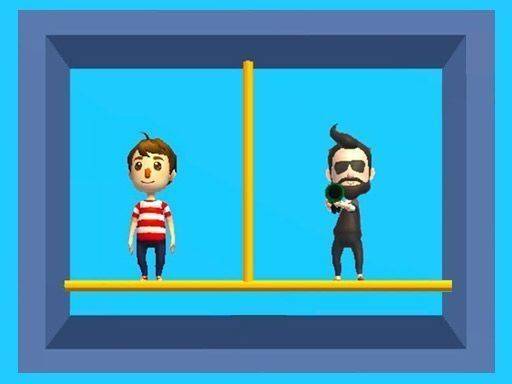
Every room in Logic Pin Escape Puzzle presents a trapped friend and a layout of pins holding back obstacles. Your job is to pull the right pins in the right order so the friend can move toward the exit without running into hazards. A mouse or touch screen handles all interactions, and the game never asks you to react quickly. Instead, it asks you to read the room before you touch anything.
Why Order Matters
Pins are not independent switches. Removing one often shifts a platform, opens a gap, or drops an object that changes what the next pin will do. The room may also contain animals or hidden devices that react to your choices. Because of this, the sequence of removals is the actual puzzle. A move that looks helpful early can block the only safe path later, so trial and error is part of the process.
Difficulty That Grows Gently
Early rooms use a small number of pins and obvious paths, which gives new players time to learn how objects interact. Later rooms add more pins, more obstacle types, and less forgiving layouts. The increase is gradual rather than sudden, so the game stays approachable for children and casual players while still offering a real challenge to anyone who enjoys logic problems.
Who This Suits
Logic Pin Escape Puzzle is designed for short breaks and longer sessions alike. There is no violent or frightening content, and the colorful graphics keep the tone light. If you like puzzles where patience and observation beat reflexes, this fits. If you want fast action or competitive play, it will feel slow.
Compatibility
Screenshots
How To Play
Player Reviews
Logic Pin Escape Puzzle delivers exactly what its name suggests: pin-pulling puzzles with a clear goal and no violent or frightening content. Its strength is the gradual difficulty curve, which lets children and casual players learn the rules before facing tougher rooms. The reliance on observation and sequencing gives it more depth than a typical tap-to-win game. The main limitation is pacing—players wanting speed or competition will find it too slow.
Comments
Sign in to leave a review
Share your rating and tip other players.
No comments yet.







Editorial Notes