
Controls
WASD
or
↑←↓→
·
Space
Move / Jump / Action
About this game
One-Button Movement, Precision Demands
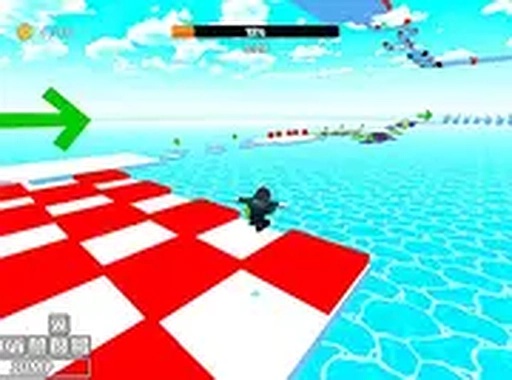
Urban Leap Platformer strips movement down to a single input: tap or click to jump. The character runs forward on its own, so you never control direction or speed. Every gap, obstacle, and platform demands correct timing. Early sections teach spacing; later arrangements chain quick successive jumps with brief recovery moments. Because the input is simple, mistakes come from misjudging rhythm rather than complex combos. The challenge scales through obstacle placement, not added buttons. This design makes the game easy to start but difficult to master, especially when chasing faster times.Handcrafted Courses and Hidden Routes
Each level is built with a specific flow. Obstacles create natural pacing, alternating demanding bursts with calmer stretches. Many courses include alternative paths that may lead to shorter completion times or special collectibles. Finding these shortcuts turns a straightforward race into a light exploration task. Environments use urban-themed backdrops that change as you progress, giving each stage a distinct look without altering the core mechanics. The level design rewards players who look beyond the obvious route and memorize layouts for cleaner runs.Unlockables and Performance Tracking
Completing levels unlocks new characters, each with a unique visual design. This gives players a way to personalize their experience without affecting gameplay. The game also tracks your performance on every level, encouraging replay to improve times and locate all hidden routes. This progression system offers motivation beyond simply finishing the game. Players who enjoy optimizing runs will find reasons to revisit earlier stages, while casual players can still complete levels at their own pace.Global Leaderboards and Competitive Edge
Global leaderboards record the best completion times for each level. You can see how your performance compares to players worldwide. This adds a competitive layer that even casual players may find engaging, as shaving off a few seconds becomes a clear goal. Leaderboards update in real time, so there is always a new target to aim for. The combination of simple controls, hidden paths, and time tracking creates a loop that appeals to speedrun-minded players without excluding those who just want to finish.Browser Access and Responsive Controls
Urban Leap Platformer runs entirely in a web browser with no installation required. It is optimized for desktop and mobile devices, with touch controls that feel responsive on tablets and phones. Graphics use a clean 3D style that performs well across a range of hardware. A full-screen mode is available for a more immersive view. Loading times are minimal, so sessions start quickly. This accessibility makes the game easy to try, though precision timing may favor players on lower-latency devices.Compatibility
✅ This game supports:
- Desktop browsers (Chrome, Edge, Safari)
- Mobile browsers (Chrome on Android, Safari on iOS)
❌ Does NOT support: - Internet Explorer - Very old browser versions
👉 Try refreshing or updating your browser
Screenshots
How To Play
Can I play Urban Leap Platformer on a phone or tablet?
Yes. The game runs in a web browser and supports touch controls on mobile devices. A single tap makes the character jump, matching the desktop click input. Performance depends on your device and browser, but the game is optimized for tablets and phones. Full-screen mode is available if you want a larger view.
Does Urban Leap Platformer have multiplayer?
No. Urban Leap Platformer is a single-player experience. Competition comes from global leaderboards that record the best completion times for each level. You can compare your times to players worldwide, but there are no real-time races or direct multiplayer modes. The focus is on personal improvement and ranking.
What do the hidden routes in Urban Leap Platformer lead to?
Many levels include alternative paths that may lead to shorter completion times or special collectibles. These routes are not required to finish a level, but they add an exploration element. Finding them can help you climb leaderboards or unlock rewards. They also give experienced players a reason to replay stages they have already completed.
How do I unlock new characters in Urban Leap Platformer?
You unlock new characters by completing levels. Each character has a unique visual design, so unlocking them lets you personalize your experience. The characters do not change gameplay mechanics; they are cosmetic. Progression is tied to finishing courses, so simply playing through the game will gradually expand your roster.
Is Urban Leap Platformer free to play?
The input does not specify a price or monetization model. Urban Leap Platformer runs in a web browser and requires no installation or special software. It is optimized for desktop and mobile devices. For accurate pricing or in-game purchase details, check the official page where the game is hosted.
What makes Urban Leap Platformer difficult?
Difficulty comes from obstacle arrangements rather than complex controls. You only tap or click to jump, but later sections chain quick successive jumps with little room for error. Timing must match the spacing of gaps and platforms. Hidden routes and leaderboard times add optional challenges for players who want to push further.
Player Reviews
Urban Leap Platformer focuses on precision timing over complex inputs. The character runs automatically, so every jump is a decision about rhythm and spacing. Handcrafted levels include alternate paths that reward exploration, while global leaderboards and performance tracking give speedrun-minded players clear goals. Unlockable characters add cosmetic progression. The game runs in a browser with responsive touch controls, making it easy to try. Its main limitation is that the one-button design may feel repetitive for players seeking deeper mechanics, but that same simplicity makes it accessible.
Comments
Sign in to leave a review
Share your rating and tip other players.
No comments yet.







Editorial Notes