
Controls
About this game
Core Objective and Moment-to-Moment Play
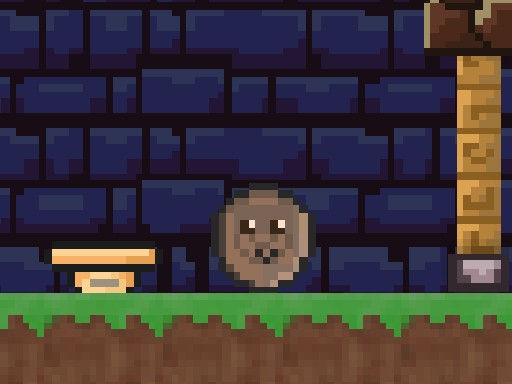
Each level in Logus Pocus Puzzle Quest asks for two things: gather the coins placed along the route and reach the gate that ends the stage. Movement is handled with left and right inputs, while a jump action clears low obstacles and gaps. The challenge comes from reading the layout, deciding when to shrink, and avoiding pits or traps that force a level restart.
The Spike-Shrinking Mechanic
Spikes are not purely a hazard here. Jumping onto them reduces your character's size, which opens passages that are otherwise too narrow. This turns each spike into a tool as much as a threat. The puzzle layer is built on timing that jump correctly and planning whether a smaller form is needed before or after collecting nearby coins.
Difficulty Curve and Level Design
Early stages introduce the basic loop of coin collection and gate reaching. Later levels combine shrinking with tighter platform arrangements and new obstacles, so the demand on precision and forethought grows gradually. Because falling sends you back to the start of the level, each attempt rewards a more careful route rather than speed alone.
Presentation and Audience Fit
Bright visuals and uncomplicated controls make the game approachable for younger players and casual users, while the shrinking-based puzzles give adults something to think about. The mix of platforming and light strategy keeps sessions short and readable on screen.
Compatibility
Screenshots

How To Play
Player Reviews
Logus Pocus Puzzle Quest keeps its rules simple: collect coins, reach the gate, and use spikes to shrink so you can enter narrow spaces. The difficulty rises by combining tighter platforming with new obstacles, and falling restarts the level. Bright visuals and basic controls make it easy to pick up, though the restart rule demands patience. Best suited to casual players and families who enjoy light spatial puzzles.
Comments
Sign in to leave a review
Share your rating and tip other players.
No comments yet.




Editorial Notes